60 years Iona: interview with Michiel ter Horst
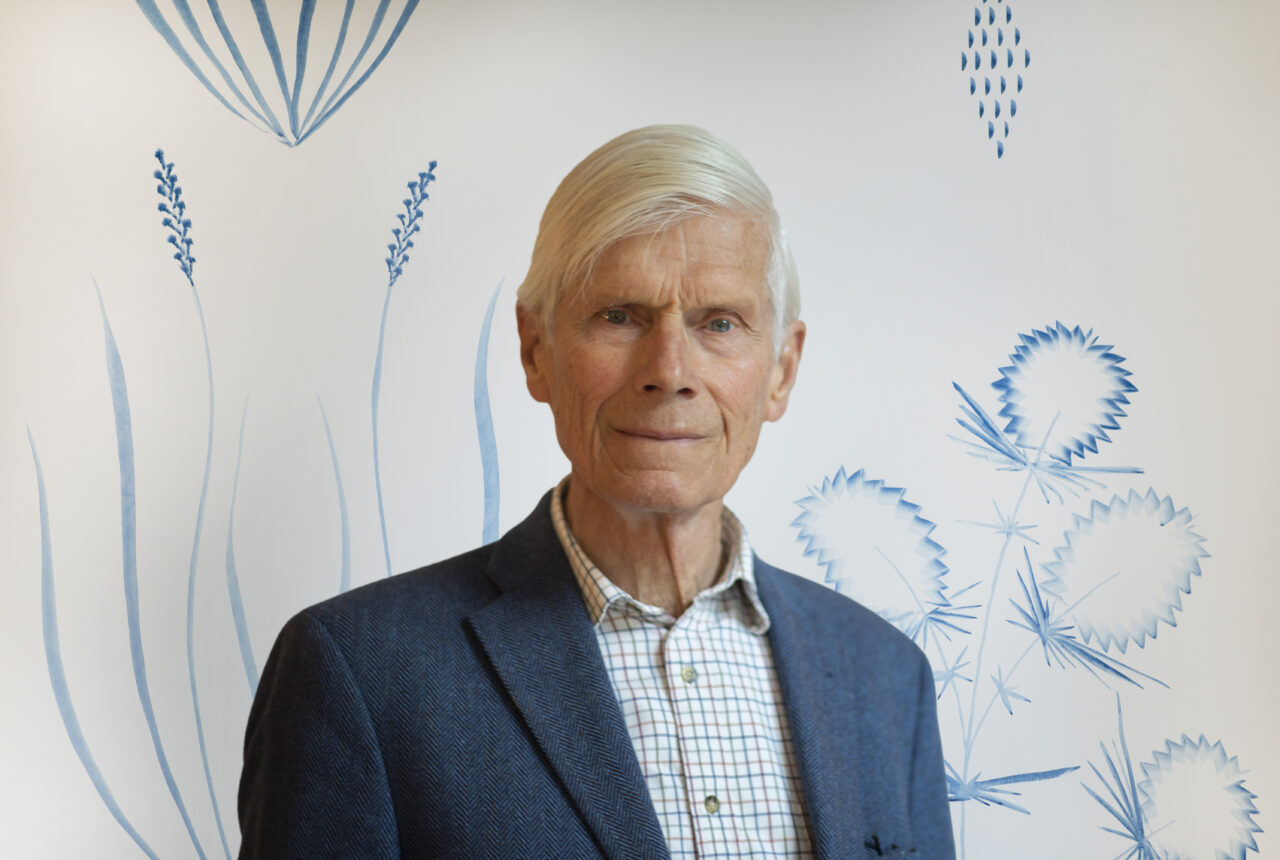
The first interview with honorary member of the Supervisory Board Michiel ter Horst. This is in the context of 60 years of the Iona Foundation.
60 years of decisiveness
On the back facade of his house in Amsterdam, Michiel ter Horst has hung a peanut butter jar for the great tits and blue tits. Not just on a string, but on a triangular wall structure. This way, the jar hangs stably, and from the window at the dining table, you can watch the birds well.
There at the table, I have a conversation about 60 years of the Iona Foundation. Michiel ter Horst has been involved with Iona from the beginning and, with great dedication, has advanced the Foundation together with many others. We look both forward and backward, delve into depth, and gaze upward.
Roos Naves (RN): How did you come into contact with Iona?
Michiel ter Horst (MtH): Mr. van der Linden, an old friend of my father, and also a fellow member of my student association, invited me to enjoy a ‘bottle of wine’ (1929!) in his architecture office on the Herengracht 276. On that November evening in 1965, Van der Linden unfolded his plan to establish the Iona Foundation. He asked me to take on the role of ‘successive board member,’ a kind of spectator’s role. The plan breathed the hope that Iona would take as long a flight as the current team now demonstrates.
RN: What struck you in that conversation?
MtH: Van der Linden saw that in the anthroposophical movement, many plans are made by enthusiastic people, but that they often did not know how to implement them. If you make a plan, you are holding the reins of a carriage with two horses, he painted. One horse wants to go up, the other down. Jan wanted to help the good planners to bring their ideal to the ground, finance it, and organize it. That was where his strength lay.
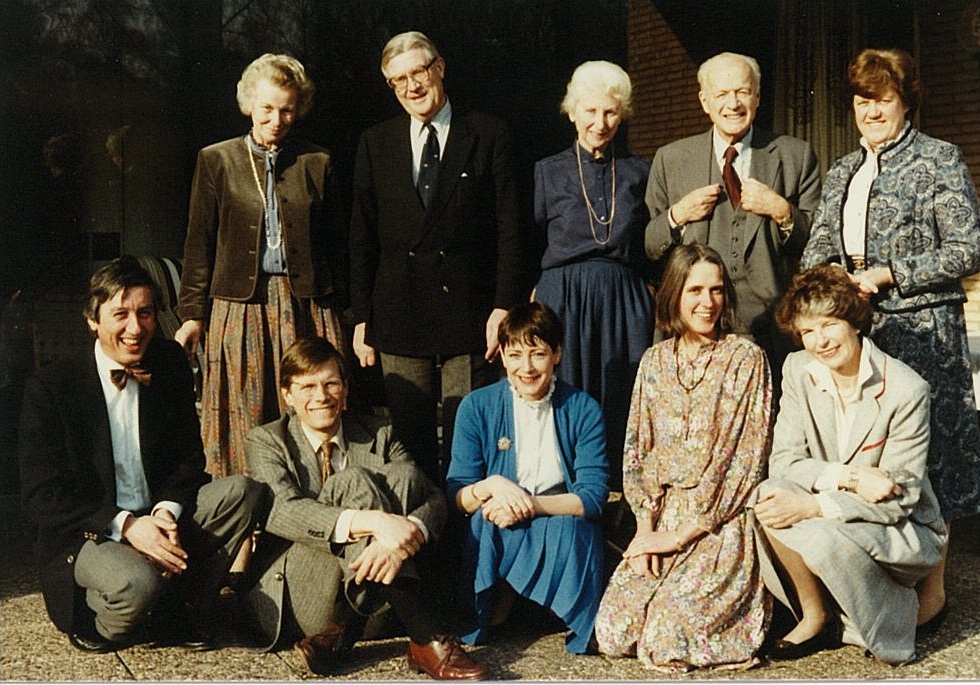
Michiel: front row, second person from the left
RN: Why did he ask you to join?
MtH: Our connection started during a trip to Dornach. He already had tickets ready for me, and although I mentioned that I had exams to take, he didn’t see that as a reason not to come along. It turned out to be a fantastic trip.
In addition, I think Van der Linden recognized my organizational skills. The first major project I initiated myself was the establishment of a wholesaler in biodynamic products. For BD (biodynamic) farmers, it was very difficult to sell their products. It was the time of the first photographs of the Earth seen from the moon. The awareness was growing that this is our only planet. And that we need to take care of it. From this realization came the report of the Club of Rome. And Iona gave strong support to my plan for the biodynamic wholesaler Akwarius. Van der Linden sent me out to collect money from friends of Iona. The experience of creating something and taking action has taught me a lot and has allowed me to feel how difficult it is to put a great ideal into reality. I gained respect for people who dare to implement an initiative without experience. They deserve support.
RN: What have you seen come and go in 60 years, Iona?
MtH: The most remarkable thing is the endless stream of initiators with wonderful plans, and also the generosity of the donors. People with ideals, who want to contribute to society with their plans. That was also Van der Linden’s goal as stated in the statutes: to promote social development.
RN: What happened when Dolf van Aalderen became director?
MtH: Dolf van Aalderen became the first director of the Foundation in 1974. A very nice person. We became very good friends. The board of the Iona Foundation was incredibly pleasant, cheerful, and decisive. Despite whole days of meetings, there was always enough energy. This liveliness was largely due to Dolf. From the ‘subsequent board members’ he chose me, and in 1975 I became treasurer.
Before Dolf’s arrival, Iona was still a fledgling volunteer organization. Some competitions and scholarship funds for students were established. A big puzzle arose from Bernard Lievegoed’s call to establish the Vrije Hogeschool. Van der Linden picked this up and offered Lievegoed to finance two-thirds of the building and grounds. He said he had donors on standby but never told who. Only later did I secretly hear that it was Mrs. Van Beuningen. She worked in our board like a shining sun. Her warmth, wisdom, and light qualities gave us strength.
RN: So Mrs. Van Beuningen played a crucial role in the development of the Iona Foundation?
MtH: Absolutely. Our Founder had a nose for people with money. He was a master beggar. Mrs. Van Beuningen belonged to his circle of friends. She lived in Belgium and had taken over the management of her husband’s oil company after his fatal accident, a huge performance. In addition, she wanted to establish a curative pedagogical institute, in which Van der Linden helped her. And he inspired her to make a gigantic donation to the Free University of Bernard Lievegoed.
RN: How would you describe the added value of the Iona Foundation?
MtH: The anthroposophical movement is a multi-stream landscape. The association included many people who were engaged in anthroposophical study, training paths, and meditation. Iona focused mainly on practical applications – how do we bring anthroposophy into practice? How do you bring initiatives to life on earth, inspired by study, meditation, and training? That is often not easy. For example, around the founding of the Free University, painful obstacles arose in the cooperation between the Iona Foundation and the Anthroposophical Association in the Netherlands.
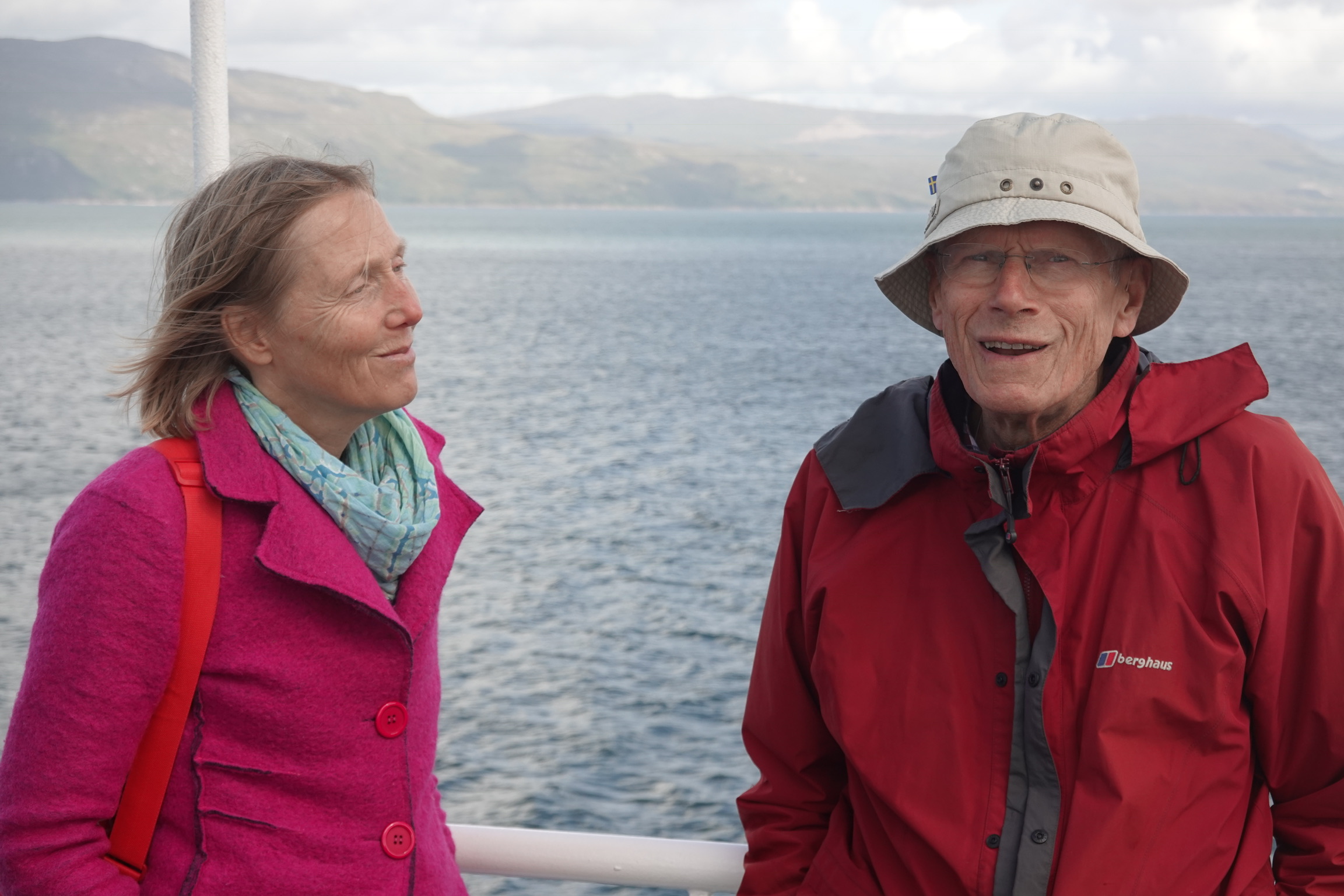
Clarine Campagne and Michiel
Nowadays, the AViN and the Iona Foundation work together in harmony and support each other in every way. When the Training Course for Anthroposophy came to an end, Clarine Campagne from Iona took over this initiative. This resulted in the now independent ‘Atelier Anthroposophy & Society,’ which is jointly sustained at a distance by Iona and AViN. Who in the 1970s would have dared to think or hope that the Association and areas of work would strive for shared housing at the Reehorst, supported by the Iona Foundation?
I want to express my great thanks to the current team of the Iona Foundation. The work is in very capable hands.
March 2026